Today's
EarthStation1.com 15% Off Commemorative Memorial Title: Fibber
McGee And Molly Complete Radio Series MP3 DVD, Download, USB
Today, April 29, 2026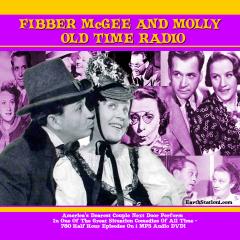
April 29: National Shrimp Scampi Day: --
Shrimp scampi has different meanings around the world. In the U.S.
"shrimp scampi" is the "menu name" for shrimp
in Italian-American cuisine. Shrimp Scampi is the culmination of
the culinary arts, bringing together rich creamy butter, delicious
garlic, tangy lemon juice, and the subtle flavors of the best
white wines, usually served with pasta, but also with bread or
rice, or sometimes as just the shrimp alone. Is it any wonder that
there's an entire day dedicated to this perfect combination of
ingredients? A day dedicated to the celebration of culinary
perfection hardly needs a reason. While the basic ingredients
listed above are the most commonly understood to be involved in
scampi, it turns out there's actually quite a number of different
varieties depending on where in the world you are. How did this
come to pass? Well, it's quite simple actually, it all comes down
to what, precisely, scampi is. Scampi, as it turns out, is the
name given to Nephrops Norvegicus, otherwise known as the Norway
lobster. But in the US it's also the common name for shrimp when
served as part of Italian-American food in the states. British
Scampi appears to be served as a form of fish-and-chips, with the
Nephrops Norvegicus being served battered and fried. Ultimately
though, we think we'd have to argue that the American Scampi is
the superior form. When it includes shrimp, garlic, butter, and
wine, how could you possibly go wrong? In the May 27, 1947 episode
of the Fibber McGee And Molly radio show, McGee cooks "Shrimps
McGee", which is essentially a traditional shirmp scampi
recipe with his grandmother's personally preferred seasonings and
measures added to it! On Sale @ 15% Off Discount Till Midnight PT!
https://store.earthstation1.com/fibber-mcgee-and-molly-mp3-dvd-complete-radio-serie3.html
Today's
EarthStation1.com 15% Off Commemorative Memorial Title: Walt
Whitman Documentary Biography DVD, Video Download, USB Drive
Today, April 29, 2026
April 29: Poem In Your Pocket Day: --
Celebrated every year to encourage people across the United States
to express themselves through poetry. The holiday began in 2002
when the Office of the Mayor in New York City, in collaboration
with the city's Departments of Cultural Affairs and Education,
announced their intent to deem this day Poem in Your Pocket Day.
Individuals are encouraged to write their own poetry, perform
their own work, or create their own art inspired by poetry. The
aim, of course, is to remind people of their participation in the
living art of poetry. Poetry goes back to the days before humans
knew how to pen down words. The first poems are believed to have
been spoken words, and passed down through oral tradition. The
earliest poetry exists in the form of hymns and chants. Most of
the oldest surviving poetry is religious, such as prayers or
stories about religiously significant events; other surviving
poetry recounts historical events, instructions for activities,
and even declarations of love. Historians today hold that the
earliest instances of written poetry suggest the existence of
older oral traditions. Poetry sprung up across the globe at
several points in time. In Africa, for example, the art dates back
to prehistoric times, when people wrote poetry in the river
valleys of the Nile and Niger as well as the Volta River. Some of
the earliest poetry in the region is from the "Pyramid Texts"
written as early as the 25th century B.C. The first-ever
speculative fiction poem is believed to be the "Tale of the
Shipwrecked Sailor," which was composed in Hieratic around
2500 B.C. Other scholars believe that "The Epic of Gilgamesh"
is the oldest composition of this kind. Aside from these two,
other poems counted among the oldest are the Greek "Iliad"
and "Odyssey," along with the Sanskrit "Mahabharata"
and "Ramayana." "Mahabharata" has been
considered the longest poem ever written. The nature of poetry has
evolved over the years, and many structural traditions and
literary movements have come and gone. Today, poetry exists in
many forms, from song lyrics to stanzas of freeform, postmodern
poems. On Sale @ 15% Off Discount Till Midnight PT!
https://store.earthstation1.com/walt-whitman-dvd-biography-poetry-documentary.html
Today's
EarthStation1.com 15% Off Commemorative Memorial Title: The Ballet
Russe: The Paris Opera Ballet Serge Diaghilev DVD MP4 USB
Today, April 29, 2026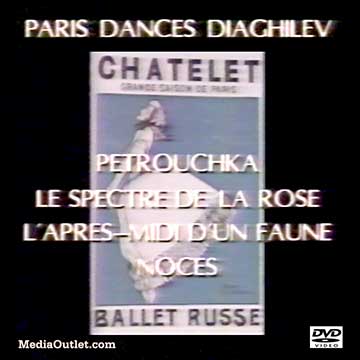
April 29: International Dance Day: --
April 29, 1727: #BOTD: #HBD! Jean-Georges Noverre, French dancer
and ballet master, generally considered the creator of ballet
d'action, a precursor of the narrative ballets of the 19th century
and of what we consider modern ballet (d. October 19, 1810) is
#born at an unknown location in France. The birthday of
Jean-Georges Noverre is now observed as International Dance Day, a
global celebration of dance created by the Dance Committee of the
International Theatre Institute (ITI), the main partner for the
performing arts of UNESCO, that strives to encourage participation
and education in dance through events and festivals held on the
date all over the world. His first professional appearances
occurred as a youth in Paris at the Opera-Comique, at
Fontainebleau, in Berlin before Frederick II and his brother
Prince Henry of Prussia, in Dresden and Strasburg. In 1747 he
moved to Strasbourg, where he remained until 1750 before moving to
Lyon. In 1751, he composed his first great work, Les Fetes
Chinoises for Marseilles. The work was revived in Paris in 1754 to
great acclaim. In 1755, he was invited by Garrick to London, where
he remained for two years. Between 1758 and 1760 he produced
several ballets at Lyon, and published his Lettres sur la danse et
les ballets. It is from this period that the revolution in the art
of the ballet for which Noverre was responsible can be dated.
Prior to Noverre, ballets were large spectacles that focused
mainly on elaborate costumes and scenery and not on the physical
and emotional expression of the dancers. He was next engaged by
Duke Karl Eugen of Wurttemberg, and later Austrian Empress Maria
Theresa, until 1774. In 1776, he was appointed maitre des ballets
of the Paris Opera at the request of Queen Marie Antoinette. He
returned to Vienna in Spring of 1776 to stage ballets there, but
in June 1776 he returned again to Paris. He regained this post
until the French Revolution reduced him to poverty. He died on 19
October 1810 at Saint-Germain-en-Laye. Noverre's friends included
Voltaire, Mozart, Frederick the Great and David Garrick (who
called him "the Shakespeare of the dance"). The ballets
of which he was most proud were his La Toilette de Venus, Les
Jalousies du serail, L'Amour corsaire and Le Jaloux sans rival.
Besides the Lettres sur la danse, Noverre wrote Observations sur
la construction d'une nouvelle salle de l'Opera (1781); Lettres
sur Garrick ecrites a Voltaire (1801); and Lettre a un artiste sur
les fetes publiques (1801). Jean-Georges Noverre #died at
Saint-Germain-en-Laye in the western suburbs of Paris, the French
Revolution having reduced him to poverty, aged 83. He is buried at
Saint Stephen's Church, Strasbourg, France. On Sale @ 15% Off
Discount Till Midnight PT!
https://store.earthstation1.com/the-ballet-russe-a-la-the-paris-opera-ballet-dvd-serge-diaghilev.html
Today's
EarthStation1.com 15% Off Commemorative Memorial Title: Rusty
Warren Comedy Album MegaSet MP3 CD Audio Download USB Drive
Today, April 29, 2026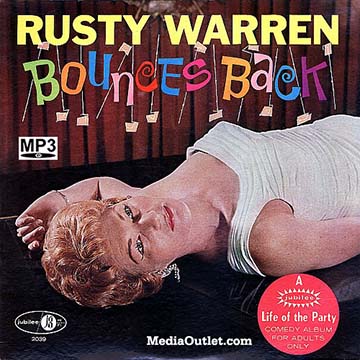
April 29: National Zipper Day: -- Are we
full of zip today! We take many things in life for granted and the
humble zipper is one of them. Have you ever paused to reflect on
how zippers play a huge role in our daily lives? Zippers come in
apparel, purses, boots, etc. and are incredibly useful. While the
first occurrence of National Zipper Day remains uncertain, there
is actually quite an extensive history behind this device that has
a whole day dedicated to it. It is believed that Elias Howe may
have invented the first zipper and got a patent for what he called
the "Automatic, Continuous Clothing Closure" in the
1800s. However, neither did he market his product nor did he get
any recognition for it. In that same period, a "clasp locker"
was introduced at the Chicago World's Fair to fasten shoes. While
it somewhat resembled Howe's creation, it wasn't the same and lost
steam quickly. However, the company that manufactured it, the
Universal Fastener Company, continued to be fully operational
nonetheless. A Swedish-American electrical engineer employed at
Universal Fastener, Gideon Sundback, is credited with designing
the modern zipper. He got the first patent for a "Hookless
Fastener" on April 29, 1913, which was later developed into
the "Separable Fastener". It took a while to become
popular as it was mostly a shoe fastener in the beginning after
which the military started using the device during World War 1 for
flying suits. Some manufacturers even used the device on tobacco
pouches. Nevertheless, it was precisely a decade after this device
received its first patent, that it would actually be called the
'zipper'. The term was coined by B.F. Goodrich in 1923 because of
the sound it made. National Zipper Day helps to put the humble
zipper back in the spotlight, even if just for one day! On Sale @
15% Off Discount Till Midnight PT!
https://store.earthstation1.com/rusty-warren-comedy-album-megaset-mp3-cd-audio-download-usb-driv3.html
Today's
EarthStation1.com 15% Off Commemorative Memorial Title: A Duke
Named Ellington TV Series Duke Ellington DVD Download USB Drive
Today, April 29, 2026
April 29: Duke Ellington Day: -- April
29, 1899: #BOTD: #HBD! Duke Ellington, American composer, pianist,
bandleader and Prince Hall Freemason (d. May 24, 1974) is #born
Edward Kennedy Ellington in Washington, D.C.. He led a jazz
orchestra from 1923 until his death, in a career spanning over
fifty years. Ellington was based in New York City from the
mid-1920s onward, and gained a national profile through his
orchestra's appearances at the Cotton Club in Harlem. In the
1930s, his orchestra toured in Europe. Though widely considered to
have been a pivotal figure in the history of jazz, Ellington
embraced the phrase "beyond category" as a liberating
principle, and referred to his music as part of the more general
category of American Music, rather than to a musical genre such as
jazz. Some of the musicians who were members of Ellington's
orchestra, such as: saxophonists Johnny Hodges, Ben Webster and
Paul Gonzalves; trumpeters Cootie Williams and Ray Nance;
clarinetist Barney Bigard, drummers Bobby Durham and Sonny Greer;
trombonist Juan Tizol; singers Al Hibbler and Herb Jeffries, and
more are considered to be among the best players in jazz.
Ellington melded them into the best-known orchestral unit in the
history of jazz. Some members stayed with the orchestra for
several decades. A master at writing miniatures for the
three-minute 78 rpm recording format, Ellington wrote more than
one thousand compositions; his extensive body of work is the
largest recorded personal jazz legacy, with many of his works
having become standards. Ellington also recorded songs written by
his bandsmen, for example Juan Tizol's "Caravan", and
"Perdido", which brought a Spanish tinge to big band
jazz. After 1941, Ellington collaborated with
composer-arranger-pianist Billy Strayhorn, whom he called his
writing and arranging companion. With Strayhorn, he composed many
extended compositions, or suites, as well as additional short
pieces. Following an appearance at the Newport Jazz Festival, in
July 1956, Ellington and his orchestra enjoyed a major career
revival and embarked on world tours. Ellington recorded for most
American record companies of his era, performed in several films,
scoring several, and composed stage musicals. Due to his inventive
use of the orchestra, or big band, and thanks to his eloquence and
charisma, Ellington is generally considered to have elevated the
perception of jazz to an art form on a par with other more
traditional musical genres. His reputation continued to rise after
he died of complications from lung cancer and pneumonia a few
weeks after his 75th birthday. At his funeral, attended by over
12,000 people at the Cathedral of St. John The Divine, Ella
Fitzgerald summed up the occasion: "It's a very sad day. A
genius has passed." He is interred in the Woodlawn Cemetery,
the Bronx, New York City. He was awarded a special posthumous
Pulitzer Prize for music in 1999. On Sale @ 15% Off Discount Till
Midnight PT!
https://store.earthstation1.com/a-duke-named-ellington-dvd-complete-2-part-tv-serie2.html
Today's
EarthStation1.com 15% Off Commemorative Memorial Title: Joan Of
Arc Biography + You Are There Bonus MP4 Video Download DVD
Today, April 29, 2026
April 29, 1429: The Crisis Of The Late
Middle Ages: The Anglo-French Wars: The Hundred Years' War
(French: Guerre de Cent Ans [1337-1453]): The Battle Of Agincourt:
The Siege Of Orleans: -- Joan Of Arc arrives to relieve the Siege
Of Orleans. The Siege Of Orleans (October 12, 1428 - May 8, 1429)
was the watershed of the Hundred Years' War between France and
England. It was the French royal army's first major military
victory to follow the crushing defeat at the Battle of Agincourt
in 1415, and also the first while Joan Of Arc was with the army.
At a time when the military situation for the French seemed
increasingly bleak, this important victory proved a decisive
turning point in the war. The siege took place at the pinnacle of
English power during the later stages of the war. The city held
strategic and symbolic significance to both sides of the conflict.
The consensus among contemporaries was that the English regent,
John of Lancaster, would have succeeded in realizing Henry V's
dream of conquering all of France if Orleans fell. For half a year
the English and their French allies appeared to be winning but the
siege collapsed nine days after Joan's arrival. On Sale @ 15% Off
Discount Till Midnight PT!
https://store.earthstation1.com/joan-of-arc-documentary-mp4-video-download-dv4.html
Today's
EarthStation1.com 15% Off Commemorative Memorial Title: Peter
Ustinov's Russia TV Documentary Series DVD, Video Download, USB
Today, April 29, 2026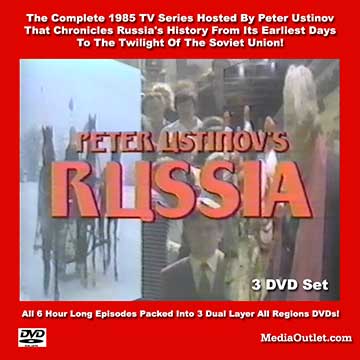
April 29 [O.S. April 17], 1818: #BOTD:
#HBD! Alexander II Of Russia, Emperor Of Russia, King Of Poland
and Grand Duke Of Finland from March 2, 1855 until his
assassination, whose most significant reforms as emperor was the
emancipation of Russia's serfs in 1861, for which he is known as
Alexander The Liberator, his tolerant policies towards the Jews,
reorganizing the judicial system, setting up elected local judges,
abolishing corporal punishment, promoting local self-government
through the Zemstvo system of local government set up during the
Emancipation Reform Of 1861 (The Edict of Emancipation), imposing
universal military service, ending some privileges of the
nobility, and promoting university education (d. March 13 [O.S.
March 1], 1881) is #Aleksandr Nikolayevich in Moscow Kremlin,
Moscow Governorate, Russian Empire. Ruling with a tolerant liberal
policy since he became Tsar in March 2, 1855, Alexander adopted a
somewhat more conservative stance until his death after an
assassination attempt in 1866. Alexander was also notable for his
foreign policy, which was mainly pacifist, supportive of the
United States, and opposite of Great Britain. Alexander backed the
Union during the American Civil War and sent warships to New York
Harbor and San Francisco Bay ostensibly to deter attacks by the
Confederate Navy and sold Alaska to the United States in 1867,
fearing the remote colony would fall into British hands if there
were another war. He sought peace, moved away from bellicose
France when Napoleon III fell in 1871, and in 1872 joined with
Germany and Austria in the League of the Three Emperors that
stabilized the European situation. Despite his otherwise pacifist
foreign policy, he fought a brief war with the Ottoman Empire in
1877-78, leading to the independence of the Bulgarian,
Montenegrin, Romanian and Serbian states, and pursued further
expansion into the Far East, leading to the founding of Khabarovsk
and Vladivostok; the Caucasus, approving plans leading to the
Circassian genocide; and Turkestan. Although disappointed by the
results of the Congress of Berlin in 1878, Alexander abided by
that agreement. Among his greatest domestic challenges was an
uprising in Poland in 1863, to which he responded by stripping
that land of its separate constitution and incorporating it
directly into Russia. Alexander was proposing additional
parliamentary reforms to counter the rise of nascent revolutionary
and anarchistic movements when he was assassinated in 1881.
Alexander II Of Russia died when he is assassinated near The
Winter Palace in Saint Petersburg, Russia when a bomb is thrown at
him while returning to the palace from Saint Petersburg's
Mikhailovsky Manege (Michael Manege) riding academy while
traveling in a closed carriage. Alexander was carried by sleigh to
the Winter Palace to his study, where almost the same day twenty
years earlier, he had signed the Emancipation Edict freeing the
serfs. Alexander was bleeding to death, with his legs torn away,
his stomach ripped open, and his face mutilated. Members of the
Romanov family came rushing to the scene. The dying emperor was
given Communion and Last Rites. When the attending physician,
Sergey Botkin, was asked how long it would be, he replied, "Up
to fifteen minutes. At 3:30 that day, the standard of Alexander II
(his personal flag) was lowered for the last time. A temporary
shrine was erected on the site of the attack while plans and
fundraising for a more permanent memorial were undertaken. The
permanent memorial took the form of The Church Of The Savior On
Blood. Construction began in 1883 under Alexander III, and was
completed in 1907 under Nicholas II. An elaborate shrine, in the
form of a ciborium, was constructed at the end of the church
opposite the altar, on the exact place of Alexander's
assassination. It is embellished with topaz, lazurite, and other
semi-precious stones, making a striking contrast with the simple
cobblestones of the old road, which are exposed in the floor of
the shrine. He is buried at Peter and Paul Cathedral, Saint
Petersburg, Russian Empire. The assassination was planned by the
Executive Committee of Narodnaya Volya (Russian: "People's
Will"), a late 19th-century revolutionary socialist political
organization which conducted assassinations of government
officials in an attempt to overthrow the autocratic Tsarist
system, in an operation chiefly planned by Andrei Zhelyabov and
orchestrated by his wife, Sophia Perovskaya, a group of plotters
known collectively as The Pervomartovtsy (Russian: "Those Of
March 1"). Of the four assassins, two of them actually
committed the deed; one assassin, Nikolai Rysakov, threw a bomb
which damaged the carriage, prompting the Tsar to disembark; then
a second assassin, Ignacy Hryniewiecki, threw a bomb that fatally
wounded Alexander II. The Pervomartovtsy accomplices - Zhelyabov,
Perovskaya, Nikolai Kibalchich, Hesya Helfman, Timofei Mikhailov,
Nikolai Rysakov - were tried by The Special Tribunal Of The Ruling
Senate on March 26-29, 1881 and sentenced to death by hanging. On
April 3, 1881, five Pervomartovtsy were hanged (except for
Helfman, whose execution had been postponed due to her pregnancy.
Her execution was later replaced with katorga (forced penal labor)
for an indefinite period of time; she nevertheless died of a
post-natal complication in prison). The remaining conpirators were
tried at The Trial Of The 20, often referred to as The Mikhailov
Trial, named after the lead defendant, Alexander Mikhailov, on
February 9-15, 1882. There is no dispute about whether the 20 were
guilty; all of them admitted their roles in carrying out or
abetting terrorist acts, and with one exception, argued that they
were justified. At the conclusion of the trial held, ten of the
defendants were sentenced to death. They included two women -
Lebedeva, and Yakimova, who was pregnant. Three others were
sentenced to hard labour for life; three - Terentyeva, Trigoni and
Zlapolsky - were sentenced to 20 years hard labour; Fridenson to
ten years and Lustig to four years hard labour. The death
sentences invoked a reaction in Russia, and abroad. The French
novelist Victor Hugo, who was particularly distressed by the
prospect that two women were to be hanged, as had already happened
to Perovskaya, wrote an impassioned letter to the new Tsar,
Alexander III, pleading: "In the darkness, I cry for mercy."
Leo Tolstoy also wrote to Alexander III in March 1881, pleading
for clemency, and warning: "If you do not forgive, but
execute the criminals, you will have uprooted three or four
individuals from among hundreds and, evil begetting evil, 30 or 40
more will grow up in place of these three or four." He sent
the letter to the Chief Procurator of the Holy Synod, Konstantin
Pobedonostsev asking him to pass it on to the Tsar, but
Pobedonostsev, who wanted to see the revolutionaries executed,
held on to it until after Perovskaya and four others had been
hanged. Most of the death sentences passed at the trial were
commuted to life imprisonment after an international outcry.
Alexander II had previously survived several attempts on his life,
including the attempts by Dmitry Karakozov and Alexander Soloviev,
the attempt to dynamite the imperial train in Zaporizhzhia, and
the bombing of the Winter Palace in February 1880. On Sale @ 15%
Off Discount Till Midnight PT!
https://store.earthstation1.com/peter-ustinov39s-russia-dvds-complete-6-part-tv-series-2-d3962.html
Today's
EarthStation1.com 15% Off Commemorative Memorial Title: The
Divided Union: American Civil War TV Series DVD, MP4, USB Drive
Today, April 29, 2026
April 29, 1862: The American Civil War
(The Civil War, The War Between The States): The Lower Seaboard
Theater Of The American Civil War: Battles Of The Lower Seaboard
Theater Of The American Civil War: New Orleans In The American
Civil War: The Capture Of New Orleans: -- New Orleans is captured
by Union forces under Navy Flag Officer David Farragut. On April
25, forces under Union Admiral David Farragut had demanded the
surrender of the Confederate city of New Orleans, Louisiana. The
prompt surrender of the city saved it from serious damage, so it
remains notably well-preserved today. New Orleans, Louisiana was
the largest city in the South, providing military supplies and
thousands of troops for the Confederate States Army. Its location
near the mouth of the Mississippi made it a prime target for the
Union, both for controlling the huge waterway and crippling the
Confederacy's vital cotton exports. In April 1862, the West Gulf
Blockading Squadron under Captain David Farragut shelled the two
substantial forts guarding each of the river-banks, and forced a
gap in the defensive boom placed between them. After running the
last of the Confederate batteries, they took the surrender of the
forts, and soon afterwards the city itself, without further
action. The new military governor, Major General Benjamin Butler,
proved effective in enforcing civic order, though his methods
aroused protest everywhere. One citizen was hanged for tearing
down the US flag, and any woman insulting a Federal soldier would
be treated as a prostitute. Looting by troops was also rife,
though apparently not with Butler's approval. He was eventually
replaced by Maj. Gen. Nathaniel P. Banks, who somewhat improved
relations between troops and citizens, but military occupation had
to continue well after the war. On Sale @ 15% Off Discount Till
Midnight PT!
https://store.earthstation1.com/the-divided-union-american-civil-war-tv-series-3-dual-layer-dvd3.html
Today's
EarthStation1.com 15% Off Commemorative Memorial Title: Hollywood
Without Make-Up: Film Star Home Movies DVD MP4 Download USB
Today, April 29, 2026
April 29, 1863: #BOTD: William Randolph
Hearst, American businessman, newspaper publisher, and politician
known for developing the nation's largest newspaper chain and
media company, Hearst Communications (d. August 14, 1951) is #born
in San Francisco to George Hearst, a millionaire mining engineer,
owner of gold and other mines through his corporation, and his
much younger wife Phoebe Apperson Hearst, from a small town in
Missouri. The elder Hearst later entered politics. He served as a
U.S. Senator, first appointed for a brief period in 1886 and was
then elected later that year. He served from 1887 to his death in
1891. In 1887, William Randolph Hearst Sr. dropped out of Harvard
to take control of the failing San Francisco Examiner which his
father had purchased. He saved the Examiner, then went to New York
and bought the New York Morning Journal to compete with Joseph
Pulitzer, and fought a bitter circulation war with Pulitzer's New
York World that sold papers by giant headlines over lurid stories
featuring crime, corruption, graphics, sex, and innuendo. Hearst'
sensational style of "yellow journalism" sold
unprecedented numbers of newspapers and included promoting a war
with Cuba in 1897-98. He expanded into other cities and into
magazine publishing, acquiring a chain of nearly 30 newspaers
papers in major American cities at its peak. He later expanded to
magazines, creating the largest newspaper and magazine business in
the world, and into books and films. He also served in Congress
and nearly became mayor of New York City. William Randolph Hearst
died in Beverly Hills at the age of 88. He is interred in the
Hearst family mausoleum at the Cypress Lawn Memorial Park in
Colma, California, which his parents had established. On Sale @
15% Off Discount Till Midnight PT!
https://store.earthstation1.com/hollywood-without-makeup-dvd-film-star-home-movies.html
Today's
EarthStation1.com 15% Off Commemorative Memorial Title: Hirohito
Documentaries Collection DVD, Video Download, USB Flash Drive
Today, April 29, 2026
April 29, 1901: #BOTD: Emperor Showa, commonly known in English-speaking countries by his personal name Hirohito, 124th Emperor of Japan according to the traditional order of succession, reigning from December 25, 1926, until his death (d. January 7, 1989) is #born Hirohito Yamato in Tokyo's Aoyama Palace during the reign of his grandfather, Emperor Meiji, the first son of 21-year-old Crown prince Yoshihito (the future Emperor Taisho) and 16-year-old Crown Princess Sadako (the future Empress Teimei). In Japan, he is now referred to primarily by his posthumous name, Emperor Showa. The word Showa is the name of the era that corresponded with the Emperor's reign, and was made the Emperor's own name upon his death. The name Hirohito means "abundant benevolence". At the start of his reign, Japan was already one of the great powers - the ninth-largest economy in the world, the third-largest naval power, and one of the four permanent members of the council of the League Of Nations. He was the head of state under the Constitution of the Empire Of Japan during Japan's imperial expansion, militarization, and involvement in World War II, while the country was led by militarist Prime Minister Hideki Tojo. Following the dropping of two atomic bombs by the U.S., he made a radio address urging his people to stop fighting. After Japan's surrender, he remained as the symbolic head of state in Japan' new parliamentary government, and he was not prosecuted for war crimes as many other leading government figures were, and his degree of involvement in wartime decisions remains controversial. In 1946, he renounced his divinity and then pursued his interest in marine biology, becoming a recognized authority in the subject. During the post-war period, he became the symbol of the new state under the post-war constitution and Japan's recovery, and by the end of his reign, Japan had emerged as the world's second largest economy. Hirohito died at the age of 87 at Fukiage Palace, Japan at 6:33 AM of duodenal cancer. At the time of his death he was both the longest-lived and longest-reigning historical Japanese emperor, as well as the longest-reigning monarch in the world at that time. Hirohito's state funeral was held on February 24 at Shinjuku Gyo-en, a large park and garden in Shinjuku and Shibuya, Tokyo, Japan that was originally a residence of the Naito family in the Edo period, then became a garden under the management of Japan Imperial Household Agency, now a national park under the jurisdiction of the Ministry Of The Environment, where he was buried near his parents, Emperor Taisho and Empress Teimei, at the Musashi Imperial Graveyard in Hachioji, Tokyo. The Emperor was succeeded by his son, the Emperor Akihito, whose enthronement ceremony was held on November 12. 1990. On Sale @ 15% Off Discount Till Midnight PT! https://store.earthstation1.com/hirohito-documentaries-dvd.html
Today's
EarthStation1.com 15% Off Commemorative Memorial Title: The Celts
TV Series On Celtic History & Culture DVD Download USB Drive
Today, April 29, 2026
April 29, 1916: 20th Century Revolutions:
Irish Nationalism: The Irish Revolutionary Period: 20th Century
Rebellions: The Easter Rising (Irish: Eiri Amach Na Casca) (The
Easter Rebellion): -- After six days of fighting, Irish rebel
leaders surrender to British forces in Dublin, bringing the Easter
Rising to an end. On Easter Monday, April 24, 1916, Irish rebels,
led by Patrick Pearse and James Connolly, launch an uprising in
Dublin against British rule and proclaim an Irish Republic. The
Easter Rising, also known as the Easter Rebellion, was an armed
insurrection in Ireland during Easter Week, April 1916. The Rising
was launched by Irish republicans to end British rule in Ireland
and establish an independent Irish Republic while the United
Kingdom was heavily engaged in the First World War. It was the
most significant uprising in Ireland since the rebellion of 1798,
and the first armed action of the Irish revolutionary period.
Organised by a seven-man Military Council of the Irish Republican
Brotherhood, the Rising lasted for six days. Members of the Irish
Volunteers, led by schoolmaster and Irish language activist
Patrick Pearse, joined by the smaller Irish Citizen Army of James
Connolly and 200 women of Cumann na mBan (The Women's Council),
seized key locations in Dublin and proclaimed an Irish Republic.
The British Army brought in thousands of reinforcements as well as
artillery and a gunboat. There was fierce street fighting on the
routes into the city centre, where the rebels put up stiff
resistance, slowing the British advance and inflicting heavy
casualties. Elsewhere in Dublin, the fighting mainly consisted of
sniping and long-range gun battles. The main rebel positions were
gradually surrounded and bombarded with artillery. There were
isolated actions in other parts of Ireland, with attacks on the
Royal Irish Constabulary barracks at Ashbourne, County Meath,
County Cork and in County Galway, and the seizure of the town of
Enniscorthy, County Wexford. Germany had sent a shipment of arms
to the rebels, but the British had intercepted it just before the
Rising began. Volunteer leader Eoin MacNeill had then issued a
countermand in a bid to halt the Rising, which greatly reduced the
number of rebels who mobilised. With much greater numbers and
heavier weapons, the British Army suppressed the Rising. Pearse
agreed to an unconditional surrender on Saturday 29 April,
although sporadic fighting continued until Sunday, when word
reached the other rebel positions. After the surrender the country
remained under martial law. About 3,500 people were taken prisoner
by the British, many of whom had played no part in the Rising, and
1,800 of them were sent to internment camps or prisons in Britain.
Most of the leaders of the Rising were executed following
courts-martial. The Rising brought physical force republicanism
back to the forefront of Irish politics, which for nearly 50 years
had been dominated by constitutional nationalism. It, and the
British reaction to it, led to increased popular support for Irish
independence. In December 1918, republicans, represented by the
reconstituted Sinn Fein party, won a landslide victory in the
general election to the British Parliament. They did not take
their seats, but instead convened the First Dail and declared the
independence of the Irish Republic. That declaration, and the
Soloheadbeg ambush, when members of the Irish Volunteers (or Irish
Republican Army, IRA) ambushed Royal Irish Constabulary (RIC)
officers who were escorting a consignment of explosives at
Soloheadbeg, County Tipperary, an action the volunteers took on
their own initiative and had not sought authorization for, started
the Irish War of Independence. 485 people were killed in the
Easter Rising. About 54% were civilians, 30% were British military
and police, and 16% were Irish rebels. More than 2,600 were
wounded. Many of the civilians were killed as a result of the
British using artillery and heavy machine guns, or mistaking
civilians for rebels. Others were caught in the crossfire in a
crowded city. The shelling and the fires it caused left parts of
inner city Dublin in ruins. On Sale @ 15% Off Discount Till
Midnight PT!
https://store.earthstation1.com/the-celts-dvd-set-tv-series-all-6-shows-celtic-history-3-dis63.html
Today's
EarthStation1.com 15% Off Commemorative Memorial Title: It Was
Twenty Years Ago Today: 1967 & Sgt. Pepper DVD MP4 USB Drive
Today, April 29, 2026
April 29, 1919: #BOTD: #HBD! Alla Rakha,
Indian tabla player, frequent accompanist of sitar player Pandit
Ravi Shankar, largely responsible for introducing Tabla to western
audiences (d. February 3, 2000) is #born Alla Rakha Khan Qureshi
in Ghagwal, Jammu Province, Kingdom Of Jammu And Kashmir, British
Raj (now in Jammu and Kashmir, India) into a family of Muslim
Dogras, an Indo-Aryan ethno-linguistic group living primarily in
the Indian union territory of Jammu and Kashmir and neighbouring
Pakistan, although most of the Dogra clan around them were Hindus.
Ustad (Or ostaz or Ustadam, Islamic honorific meaning "Master
Musician" Alla Rakha Qureshi specialised in Hindustani
classical music. When he and Ravi Shankar played at The 1967
Monterey Pop Festival, they received a prolonged standing ovation
to an audience that was floored by the produndity of their
musicianship. Alla Rakha died aged 80 at his Simla House residence
on Nepean Sea Road in Mumbai, Maharashtra, India, following a
heart attack, which he suffered on learning of the death of his
daughter, Razia, the previous evening during cataract surgery. His
burial details are unknown. In his obituary, The New York Times
called him "the most important tabla drummer of his
generation" who "used his skill to invigorate every
musician who shared the stage with him." Prime Minister of
India Atal Bihari Vajpayee also issued a formal statement
regretting his loss. On Sale @ 15% Off Discount Till Midnight PT!
https://store.earthstation1.com/it-was-20-years-ago-today-1967-and-sgt-pepp201967.html
Today's
EarthStation1.com 15% Off Commemorative Memorial Title:
Television: A History Of Broadcast TV DVD MP4 Download USB Drive
Today, April 29, 2026
April 29, 1922: #BOTD: #HBD! Toots
Thielemans, Belgian and American jazz harmonica player, guitarist,
whistler and composer, credited with making the harmonica an
accepted instrument in jazz and becoming thereby Jazz's preeminent
jazz harmonica player (d. August 22, 2016) is #born Jean-Baptiste
Frederic Isidor in Brussels, Belgium. Baron Thielemans' first
professional performances were with Benny Goodman's band when they
toured Europe in 1949 and 1950. Thielemans emigrated to the U.S.
in 1951, becoming a citizen in 1957. From 1953 to 1959 he played
with George Shearing, and then led his own groups on tours in the
U.S. and Europe. In 1961 he recorded and performed live one of his
own compositions, "Bluesette", which featured him
playing guitar and whistling. In the 1970s and 1980s, he continued
touring and recording, appearing with musicians such as Oscar
Peterson, Bill Evans, Dizzy Gillespie, Kenny Werner, Pat Metheny,
Jaco Pastorius, Elis Regina and Paquito D'Rivera. Among the film
soundtracks that Thielemans recorded are The Pawnbroker (1964),
Midnight Cowboy (1969), The Getaway (1972), Cinderella Liberty
(1973), The Sugarland Express (1974) and Looking for Mr. Goodbar
(1977). His harmonica theme song for the popular Sesame Street TV
show was heard for 40 years. He often performed and recorded with
Quincy Jones, who once called him "one of the greatest
musicians of our time." In 2009 he was designated a Jazz
Master by The National Endowment for the Arts, the highest honor
for a jazz musician in the United States. Thielemans received a
joint honorary doctorate from the Universite libre de Bruxelles
and the Vrije Universiteit Brussel, Belgium. In 2001, he was
raised into the Belgian nobility by King Albert II and created
Baron Thielemans for life, this in recognition of his contribution
to music. Herewith, he chose the motto Be yourself, no more no
less. Toots Thielemans died in Braine-l'Alleud, Belgium at the age
of 94. After the announcement, the Netherlands-based jazz and pop
orchestra Metropole Orkest, along with American musician Quincy
Jones, performed at London's Royal Albert Hall in Thielemans'
honor. Another concert was performed at the Grand-Place, Brussels.
Thielemans was buried on August 2, 2016 in La Hulpe, just outside
Brussels. Pianist Kenny Werner read a personal message from U.S.
President Barack Obama for his widow, Huguette. It read: "Dear
Huguette. I was deeply saddened when I heard about your husband's
passing. I hope that shared memories will soften your suffering.
Lift faith from the support of friends and family. Know that you
will be in my thoughts for the next days. May Toots' music lead
you and offer you consolation. I'm sure it will do this for all of
us." On Sale @ 15% Off Discount Till Midnight PT!
https://store.earthstation1.com/television-1988-tv-documentary-series-8-shows-4-dual-laye198884.html
Today's
EarthStation1.com 15% Off Commemorative Memorial Title: TV Music &
Dance Shows #14 Aretha Temptations Kinks DVD MP4 USB Drive
Today, April 29, 2026
April 29, 1928: #BOTD: #HBD! Carl
Gardner, African American singer, best known as the foremost
member and founder of The Coasters (d. June 12, 2011) is #born
Carl Edward Gardner in Tyler, Texas. As a singer, his first major
career success came with The Robins, a rhythm and blues group that
had a big hit in 1955, "Smokey Joe's Cafe" written by
the songwriting team of Jerry Leiber and Mike Stoller. After
leaving that group, in 1956 Gardner formed the Coasters with the
Robins' bass singer Bobby Nunn, Leon Hughes and Billy Guy, at the
behest of the songwriting/producing team of Jerry Leiber and Mike
Stoller, and had a two-sided hit in 1957, "Young Blood"
(on which Gardner sang lead) and "Searchin'". With new
members Cornel Gunter and Will "Dub" Jones, the Coasters
went on to produce several enduring classics of 1950s rock and
roll music including "Yakety Yak", "Charlie Brown",
and "Poison Ivy". Together with the other members of the
Coasters - Cornell Gunter, Billy Guy and Will "Dub"
Jones - Gardner was inducted into the Rock and Roll Hall of Fame
in 1987. Gardner's son, Carl Jr., officially joined the Coasters
in late 2005, after Gardner semi-retired, although Carl Jr. had
been touring with them since at least 1998. His father officially
made him a member to carry on his group as the lead singer. In
1993, shortly after moving with wife Veta to Port St. Lucie,
Florida, Gardner sought treatment for a nosebleed. He was
ultimately diagnosed by an ENT specialist with a cancerous tumor
of the nasopharynx "the size of a grapefruit", and was
told chances of survival were slim. Nevertheless after enduring
weeks of radiation therapy, the cancer went into remission never
to recur. Despite some change in the sonority of his voice he
continued to perform with the Coasters as lead singer. Carl
Gardner, Sr. died after suffering with congestive heart failure
and vascular dementia aged 83 in Port St. Lucie, Florida. He is
buried in Fernhill Memorial Gardens And Mausoleum in Stuart,
Florida. On Sale @ 15% Off Discount Till Midnight PT!
https://store.earthstation1.com/classic-tv-music-amp-dance-shows-14-aretha-temptations-kinks-d14.html
Today's
EarthStation1.com 15% Off Commemorative Memorial Title: New York
City History Documentary Collection MP4 Video Download DVD
Today, April 29, 2026
April 29, 1936: #BOTD: #HBD! Zubin Mehta,
Indian bassist and conductor of Western and Eastern classical
music is #born onto a Parsi family in Bombay, Bombay Presidency,
British India (now Mumbai, Maharashtra, India), during the British
Raj. He was the music director of the Israel Philharmonic
Orchestra (IPO) and is Conductor Emeritus of the Los Angeles
Philharmonic. Mehta's father was the founder of the Bombay
Symphony Orchestra, and Mehta received his early musical education
from him. When he was 18, he enrolled in the Vienna state music
academy, from which he graduated after three years with a diploma
as a conductor. He began winning international competitions and
conducted the Royal Liverpool Philharmonic at age 21. Beginning in
the 1960s, Mehta gained experience by substituting for celebrated
maestros throughout the world. Mehta was music director of the
Montreal Symphony Orchestra from 1961 to 1967 and of the Los
Angeles Philharmonic from 1962 to 1978, the youngest music
director ever for any major North American orchestra. In 1969, he
was appointed Music Adviser to the Israel Philharmonic Orchestra
and in 1981 he became its Music Director for Life. From 1978 to
1991, Mehta was music director of the New York Philharmonic. Since
1985, he has also been chief conductor of the Maggio Musicale
Fiorentino in Florence, Italy. He is an honorary citizen of both
Florence and Tel Aviv and was made an honorary member of the
Vienna State Opera in 1997 and of the Bavarian State Opera in
2006. The title of Honorary Conductor was bestowed on him by
numerous orchestras throughout the world. More recently, Mehta
made several tours with the Bavarian State Opera and kept up a
busy schedule of guest conducting appearances. In December 2006,
he received the Kennedy Center Honor and in October 2008 he was
honored by the Japanese Imperial Family with the Praemium
Imperiale. In 2016, Mehta was appointed Honorary Conductor of the
Teatro San Carlo, Naples. On Sale @ 15% Off Discount Till Midnight
PT!
https://store.earthstation1.com/new-york-city-history-videos-3-dvd-se3.html
Today's
EarthStation1.com 15% Off Commemorative Memorial Title:
Alternative Revolver Beatles MP3 CD Audio Download USB Flash Drive
Today, April 29, 2026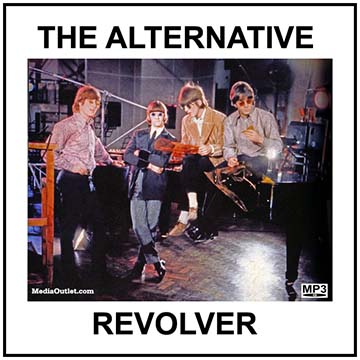
April 29, 1938: #BOTD: #HBD! Klaus
Voormann, German artist, bass player, and record producer who
designed artwork for many bands including the Beatles, Harry
Nilsson, the Bee Gees, Wet Wet Wet and Turbonegro is #born Klaus
Otto Wilhelm Voormann in Berlin, German Reich (now Germany).
Voormann's most notable work as a producer was his work with the
band Trio, including their worldwide hit "Da Da Da". As
a musician, Voormann is best known for being the bassist for
Manfred Mann from 1966 to 1969, and for performing as a session
musician on a host of recordings, including "You're So Vain"
by Carly Simon, Lou Reed's Transformer album, and on many
recordings of the former members of the Beatles. Voormann's
association with The Beatles dates back to their time in Hamburg
in the early 1960s. He lived in the band's London flat with George
Harrison and Ringo Starr after John Lennon and Paul McCartney
moved out to live with their respective partners, and designed the
cover of their album Revolver, for which he won a Grammy Award.
Following the band's split, rumours circulated of the formation of
a group named the Ladders, consisting of Lennon, Harrison, Starr
and Voormann. This failed to materialise; however, all four
would-be Ladders (plus Billy Preston) performed on the Starr track
"I'm the Greatest", and Voormann did play on solo albums
by Lennon, Harrison and Starr, as well as briefly being a member
of the Plastic Ono Band. In the 1990s, he designed the artwork for
The Beatles Anthology albums. In 2009, Voormann released his debut
solo album A Sideman's Journey, which featured many notable
musicians, including the two surviving members of the Beatles,
performing as 'Voormann and Friends'. On Sale @ 15% Off Discount
Till Midnight PT!
https://store.earthstation1.com/alternative-revolver-beatles-mp3-cd-audio-download-usb-flash-driv3.html
Today's
EarthStation1.com 15% Off Commemorative Memorial Title: Crusade In
Europe WWII TV Series DVD, Video Download, USB Flash Drive
Today, April 29, 2026
April 29, 1945: The European Civil War:
World War II: The Second European War (The European Theater Of
World War II): The Mediterranean And Middle East Theater Of World
War II: The Italian Campaign Of World War II (The Liberation Of
Italy): The Surrender Of Caserta (Italian: Resa Di Caserta (The
Surrender Of German And Italian Fascist Forces In Italy): -- The
German army in Italy unconditionally surrenders to the Allies. The
day prior, April 28, 1945, twenty three years of Fascist rule in
Italy abruptly ended as Italian partisans summarily execute Benito
Mussolini. On Sale @ 15% Off Discount Till Midnight PT!
https://store.earthstation1.com/crusade-in-europe-2-dual-layer-dvds-tv-series-eisenhowe2.html
Today's
EarthStation1.com 15% Off Commemorative Memorial Title: The Old
Time Radio History MP3 MegaSet DVD, Audio Download, USB Drive
Today, April 29, 2026
April 29, 1945: History Of The Jews In
Germany: The European Civil War: World War II: The Second European
War (The European Theater Of World War II): The Holocaust (Shoah):
The Holocaust In Germany: Dachau Concentration Camp: -- Units of
the United States 3rd Battalion, 157th Infantry Regiment, 45th
Infantry Division, commanded by Lieutenant Colonel Felix L.
Sparks, liberate Dachau Concentration Camp by entering the camp
over a side wall. At about the same time, Brigadier General
Henning Linden led the 222nd Infantry Regiment of the 42nd
(Rainbow) Infantry Division soldiers including his aide,
Lieutenant William Cowling, to accept the formal surrender of the
camp from German Lieutenant Heinrich Wicker at an entrance between
the camp and the compound for the SS garrison. Linden was
traveling with Marguerite Higgins and other reporters; as a
result, Linden's detachment generated international headlines by
accepting the surrender of the camp. More than 30,000 Jews and
political prisoners were freed, and since 1945 adherents of the
42nd and 45th Division versions of events have argued over which
unit was the first to liberate Dachau. The creation of Dachau
Concentration Camp was ordered created on March 20, 1933 by
Reichsfuehrer-SS Heinrich Himmler, as Chief of Police of Munich,
and he appointed Theodor Eicke as the camp commandant. Dachau
concentration camp was the first of the Nazi concentration camps
opened in Germany, intended to hold political prisoners. It is
located on the grounds of an abandoned munitions factory northeast
of the medieval town of Dachau, about 16 km northwest of Munich in
the state of Bavaria, in southern Germany. Its purpose was
enlarged to include forced labor, and eventually, the imprisonment
of Jews, German and Austrian criminals, and eventually foreign
nationals from countries that Germany occupied or invaded. The
Dachau camp system grew to include nearly 100 sub-camps, which
were mostly work camps or Arbeitskommandos, and were located
throughout southern Germany and Austria. The camps were liberated
by U.S. forces on 29 April 1945. Prisoners lived in constant fear
of brutal treatment and terror detention including standing cells,
floggings, the so-called tree or pole hanging, and standing at
attention for extremely long periods. There were 32,000 documented
deaths at the camp, and thousands that are undocumented.
Approximately 10,000 of the 30,000 prisoners were sick at the time
of liberation. In the postwar years the Dachau facility served to
hold SS soldiers awaiting trial. After 1948, it held ethnic
Germans who had been expelled from eastern Europe and were
awaiting resettlement, and also was used for a time as a United
States military base during the occupation. It was finally closed
in 1960. There are several religious memorials within the Memorial
Site, which is open to the public. On Sale @ 15% Off Discount Till
Midnight PT!
https://store.earthstation1.com/the-old-time-radio-history-megaset-dual-layer-mp3-dv3.html
Today's
EarthStation1.com 15% Off Commemorative Memorial Title: Eva Braun:
Hitler's Mistress + Bonus In Search Of DVD, MP4. USB Drive
Today, April 29, 2026
April 29, 1945: The European Civil War:
World War II: The Second European War (The European Theater Of
World War II): The Eastern Front Of World War II: The Great
Patriotic War (The German-Soviet War): The Battle Of Berlin (The
Berlin Strategic Offensive Operation, The Fall Of Berlin): The
Fuhrerbunker (The Fuehrerbunker): -- Adolf Hitler marries his
longtime partner Eva Braun in a Berlin bunker and designates
Admiral Karl Doenitz as his successor; Hitler and Braun supposedly
both commit suicide the following day. On Sale @ 15% Off Discount
Till Midnight PT!
https://store.earthstation1.com/eva-braun-hitler39s-mistress-dvd-color-film-of-hitler39s-house3939.html
Today's
EarthStation1.com 15% Off Commemorative Memorial Title: The March
Of Time Newsreel Set 1933-46 All 3 TV Series DVD, MP4, USB
Today, April 29, 2026
April 29, 1946: The Aftermath Of The
European Civil War: World War II: The Second European War (The
European Theater Of World War II): The Pacific War (The
Asia-Pacific War, The Pacific Theater Of World War II): The
International Military Tribunal For The Far East (IMTFE, The Tokyo
Trials, The Tokyo War Crimes Tribunal): -- The IMTFE convenes and
indicts former Prime Minister of Japan Hideki Tojo and 28 former
Japanese leaders for war crimes. The International Military
Tribunal for the Far East. IMTFE was a military trial convened to
try the leaders of the Empire Of Japan for "Class A"
crimes, which were reserved for those who participated in a joint
conspiracy to start and wage war. Twenty-eight Japanese military
and political leaders were charged with waging aggressive war and
with responsibility for conventional war crimes. More than 5,700
lower-ranking personnel were charged with conventional war crimes
in separate trials convened by Australia, China, France, the
Netherlands, the Philippines, the United Kingdom and the United
States. The charges covered a wide range of crimes including
prisoner abuse, rape, sexual slavery, torture, ill-treatment of
labourers, execution without trial and inhumane medical
experiments. China held 13 tribunals, resulting in 504 convictions
and 149 executions. The Japanese Emperor Hirohito and all members
of The Imperial Family, such as career officer Prince Yasuhiko
Asaka, were not prosecuted for involvement in any of the three
categories of crimes. Herbert Bix explained, "The Truman
Administration and General MacArthur both believed the occupation
reforms would be implemented smoothly if they used Hirohito to
legitimise their changes". As many as 50 suspects, such as
Nobusuke Kishi, who later became Prime Minister, and Yoshisuke
Aikawa, head of Nissan, were charged but released in 1947 and
1948. Shiro Ishii received immunity in exchange for data gathered
from his experiments on live prisoners. The lone dissenting judge
arguing to exonerate all arrested suspects was Indian jurist
Radhabinod Pal. The tribunal was adjourned on November 12, 1948.
On Sale @ 15% Off Discount Till Midnight PT!
https://store.earthstation1.com/the-march-of-time-dvd-set-all-3-tv-series-19334631933467.html
Today's
EarthStation1.com 15% Off Commemorative Memorial Title: The Golden
Age Of Rock 'N' Roll DVD, MP4 Video Download, Flash Drive
Today, April 29, 2026
( #JCKaelin here: I had some funny times
with Tommy James during the filming of the charity video "We
Got The Love", produced by Vinnie Fusco in New Jersey during
the mid 1980s (where I also hung out with Felix Cavaliere of The
Rascals and an (obnoxious) Al Aronowitz). I accidentally spilled a
cola soft drink on the hood of someone's car, and as I hurriedly
wiped it off so as not to damage the paint job (pouring cola on a
car's paint as a hooligan prank was a "thing" in those
days), he walked by with his pretty girlfriend tucked under his
arm (he's very tall, and she fit right in), he laughed and said "I
won't tell anyone if you won't!" :D ) ========= April 29,
1947: #BOTD: #HBD! Tommy James, also known as Tommy Tadger,
American singer, songwriter, guitarist and record producer, is
#born Thomas Gregory Jackson in Dayton, Ohio. Tommy James is
widely known as leader of the 1960s rock band Tommy James and the
Shondells, who became famous for their Hit Songs "Hanky
Panky", "I Think We're Alone Now", "Mony
Mony", "Crimson And Clover" and "Draggin' The
Line", all released on the Roulette Records label. On Sale @
15% Off Discount Till Midnight PT!
https://store.earthstation1.com/the-golden-age-of-rock-39n39-roll-dvd-complete-tv-series-5-39395.html
Today's
EarthStation1.com 15% Off Commemorative Memorial Title: Muhammad
Ali Documentaries And Entire Fights DVD, Download, USB Drive
Today, April 29, 2026
April 29, 1967: The History Of Sports:
The History Of Sports In The United States: The History Of Boxing:
The History Of Heavyweight Boxing: The Aftermath Of World War II:
The Cold War: The Cold War In Asia: The Indochina Wars: The
Vietnam War (The Second Indochina War, The Vietnam Conflict, The
Resistance War Against America): Opposition To United States
Involvement In The Vietnam War: Clay v. United States: -- After
refusing induction into the United States Army the previous day,
Boxer Muhammad Ali is stripped of his boxing title. On April 28,
Ali appeared in Houston for his scheduled induction into the U.S.
Armed Forces, but he refused three times to step forward when his
name was called. An officer warned him that he was committing a
felony punishable by five years in prison and a fine of 10K USD.
Once more, Ali refused to budge when his name was called, and he
was arrested. Later that same day, the New York State Athletic
Commission suspended his boxing license and stripped him of his
title. Other boxing commissions followed suit, and Ali's boxing
license was revoked in every state. Ali would not be able to
obtain a license to box in any state for over three years. At the
trial on June 20, 1967, the jury found Ali guilty after only 21
minutes of deliberation. After a Court of Appeals upheld the
conviction, the case was reviewed by the U.S. Supreme Court in
1971. Ali remained free in the years between the Appellate Court
decision and the Supreme Court ruling. As public opinion began
turning people against the war and the Civil Rights Movement
continued to gather momentum, Ali became a popular speaker at
colleges and universities across the country; this itinerary was
rare if not unprecedented for a prizefighter. At Howard
University, for example, he gave his popular "Black Is Best"
speech to 4,000 cheering students and community intellectuals,
after he was invited to speak by sociology professor Nathan Hare
on behalf of the Black Power Committee, a student protest group.
On June 28, 1971, the Supreme Court Of The United States in Clay
v. United States overturned Ali's conviction by a unanimous 8-0
decision (Justice Thurgood Marshall recused himself, as he had
been the U.S. Solicitor General at the time of Ali's conviction).
The decision was not based on, nor did it address, the merits of
Ali's claims per se; rather, the Court held that since the appeal
board gave no reason for the denial of a conscientious objector
exemption to Ali, and that it was therefore impossible to
determine which of the three basic tests for conscientious
objector status offered in the Justice Department's brief that the
appeal board relied on, Ali's conviction must be reversed. Ali did
not fight from March 1967 to October 1970 - from the ages of 25 to
almost 29, some of his potentially most promising athletic years -
as his case worked its way through the appeals process. On Sale @
15% Off Discount Till Midnight PT!
https://store.earthstation1.com/muhammad-ali--dvd-2-discs-documentaries-and-entire-fight2.html
Today's
EarthStation1.com 15% Off Commemorative Memorial Title: 1968: A
CBS News Special Report Harry Reasoner DVD, MP4, USB Drive
Today, April 29, 2026
April 29, 1968: Premieres: Theatre
Premieres: Musical Premieres: United States Musical Premieres:
Broadway Premieres: -- The controversial musical "Hair: The
American Tribal Love-Rock Musical", a product of the hippie
counter-culture and sexual revolution of the 1960s, opens at the
Biltmore Theatre on Broadway, with some of its songs becoming
anthems of the anti-Vietnam War movement. Hair is a rock musical
with a book and lyrics by Gerome Ragni and James Rado and music by
Galt MacDermot. The work reflects the creators' observations of
the hippie counterculture and sexual revolution of the late 1960s,
and several of its songs became anthems of the anti-Vietnam War
peace movement. The musical's profanity, its depiction of the use
of illegal drugs, its treatment of sexuality, its irreverence for
the American flag, and its nude scene caused much comment and
controversy. The work broke new ground in musical theatre by
defining the genre of "rock musical", using a racially
integrated cast, and inviting the audience onstage for a "Be-In"
finale. Hair tells the story of the "tribe", a group of
politically active, long-haired hippies of the "Age of
Aquarius" living a bohemian life in New York City and
fighting against conscription into the Vietnam War. Claude, his
good friend Berger, their roommate Sheila and their friends
struggle to balance their young lives, loves and the sexual
revolution, with their rebellion against the war and their
conservative parents and society. Ultimately, Claude must decide
whether to resist the draft as his friends have done, or to serve
in Vietnam, compromising his pacifist principles and risking his
life. After an off-Broadway debut on October 17, 1967, at Joseph
Papp's Public Theater and a run at the Cheetah nightclub from
December 1967 through January 1968, the show opened on Broadway in
April 1968 and ran for 1,750 performances. Simultaneous
productions in cities across the United States and Europe followed
shortly thereafter, including a successful London production that
ran for 1,997 performances. Since then, numerous productions have
been staged around the world, spawning dozens of recordings of the
musical, including the 3 million-selling original Broadway cast
recording. Some of the songs from its score became Top 10 hits,
and a feature film adaptation was released in 1979. A Broadway
revival opened in 2009, earning strong reviews and winning the
Tony Award and Drama Desk Award for Best Revival of a Musical. In
2008, Time wrote, "Today Hair seems, if anything, more daring
than ever." On Sale @ 15% Off Discount Till Midnight PT!
https://store.earthstation1.com/1968-dvd-cbs-news-special-report-10-years-later-harry-re196810.html
Today's
EarthStation1.com 15% Off Commemorative Memorial Title:
Unauthorized Biography: Richard Nixon w/Barbara Howar MP4 Download
DVD
Today, April 29, 2026
April 29, 1970: The Aftermath Of World
War II: The Cold War: The Cold War In Asia: The Indochina Wars:
The Vietnam War (The Second Indochina War, The Vietnam Conflict,
The Resistance War Against America): The Cambodian Civil War: The
Cambodian Campaign (The Cambodian Incursion, The Cambodian
Liberation): -- United States and South Vietnamese forces invade
Cambodia to hunt Viet Cong. The day prior, April 28, 1970,
President Richard Nixon formally authorized American combat troops
to attack communist sanctuaries in Cambodia. Amid protests at home
demanding an immediate pullout of American forces in Vietnam,
Nixon implemented a strategy of replacing American troops with
Vietnamese troops, known as "Vietnamization". He soon
instituted phased U.S. troop withdrawals, but authorized
incursions into Laos, in part to interrupt the Ho Chi Minh Trail,
used to supply North Vietnamese forces, that passed through Laos
and Cambodia. On April 28, 1970, Nixon ordered that US troops
invade Cambodia to attack and destroy the communist sanctuaries
belonging to the Cambodian Khmer Rouge communist forces to cease
their operations in aiding Viet Cong and North Vietnamese forces.
Nixon formally announced the ground invasion of Cambodia to the
American public on April 30, 1970. His responses to protesters
included an impromptu, early morning meeting with them at the
Lincoln Memorial on May 9, 1970. Nixon's campaign promise to curb
the war, contrasted with the escalated bombing, led to claims that
Nixon had a "credibility gap" on the issue. It is
estimated that between 50,000 and 150,000 people were killed
during the bombing of Cambodia between 1970 and 1973. On Sale @
15% Off Discount Till Midnight PT!
https://store.earthstation1.com/unauthorized-biography-richard-nixon-dvd-documentary.html
Today's
EarthStation1.com 15% Off Commemorative Memorial Title: Chopper
Wars: Vietnam War & Airmobile Helicopters 2 MP4s Or 2 DVD Set
Today, April 29, 2026
April 29, 1975: The Aftermath Of World
War II: The Cold War: The Cold War In Asia: The Indochina Wars:
The Vietnam War (The Second Indochina War, The Vietnam Conflict,
The Resistance War Against America): The 1975 Spring Offensive
{Vietnamese: Chien Dich Mua Xuan 1975; officially The General
Offensive And Uprising Of Spring 1975 (Vietnamese: Tong Tien Cong
Va Noi Day Mua Xuan 1975)}: The Battle Of Xuan Loc (Vietnamese:
Tran Xuan Loc) (The Fall Of Saigaon, The Fall Of South Vietnam):
Operation Frequent Wind ("I'm Dreaming Of A White
Christmas"): -- Armed Forces Radio Saigon broadcasts "The
temperature in Saigon is 105 degrees and rising.", then plays
Bing Crosby's "I'm Dreaming of a White Christmas.". With
this coded message, US involvement in the Vietnam War comes to end
as it ceases to evacuate U.S. citizens from Saigon by fixed-wing
aircraft and begins Operation Frequent Wind, the helicopter
evacuation of US personnel, at-risk Vietnamese and foreign
journalists begins, before an expected North Vietnamese takeover.
The evacuation was the largest helicopter evacuation in history.
In preparation for the evacuation, the American Embassy had
distributed a 15-page booklet called SAFE, short for "Standard
Instruction and Advice to Civilians in an Emergency." The
booklet included a map of Saigon pinpointing "assembly areas
where a helicopter will pick you up." There was an insert
page which read: "Note evacuational signal. Do not disclose
to other personnel. When the evacuation is ordered, the code will
be read out on Armed Forces Radio. The code is: The temperature in
Saigon is 105 degrees and rising. This will be followed by the
playing of I'm Dreaming of a White Christmas.". Japanese
journalists, concerned that they would not recognize the tune, had
to get someone to sing it to them. On Sale @ 15% Off Discount Till
Midnight PT!
https://store.earthstation1.com/chopper-wars-vietnam-war-amp-airmobile-helicopters-dvd-mp4-us4.html
Today's
EarthStation1.com 15% Off Commemorative Memorial Title: The
Poisoned Winds Of War + Bonus Chemical/Biological Weapons MP4 DVD
Today, April 29, 2026
April 29, 1997: The Aftermath Of World
War II: The Cold War: Arms Control: Chemical Weapons Arms Control:
The Chemical Weapons Convention (CWC) (The Convention On The
Prohibition Of The Development, Production, Stockpiling And Use Of
Chemical Weapons And On Their Destruction): -- The Chemical
Weapons Convention Of 1993 enters into force, outlawing the
production, stockpiling and use of chemical weapons by its
signatories. The Chemical Weapons Convention (CWC), officially the
Convention on the Prohibition of the Development, Production,
Stockpiling and Use of Chemical Weapons and on their Destruction,
is an arms control treaty administered by the Organisation for the
Prohibition of Chemical Weapons (OPCW), an intergovernmental
organization based in The Hague, The Netherlands. The treaty
entered into force on 29 April 1997, and prohibits the large-scale
use, development, production, stockpiling and transfer of chemical
weapons and their precursors, except for very limited purposes
(research, medical, pharmaceutical or protective). The main
obligation of member states under the convention is to effect this
prohibition, as well as the destruction of all current chemical
weapons. All destruction activities must take place under OPCW
verification. As of August 2022, 193 states have become parties to
the CWC and accept its obligations. Israel has signed but not
ratified the agreement, while three other UN member states (Egypt,
North Korea and South Sudan) have neither signed nor acceded to
the treaty. Most recently, the State of Palestine deposited its
instrument of accession to the CWC on 17 May 2018. In September
2013, Syria acceded to the convention as part of an agreement for
the destruction of Syria's chemical weapons. As of February 2021,
98.39% of the world's declared chemical weapons stockpiles had
been destroyed. The convention has provisions for systematic
evaluation of chemical production facilities, as well as for
investigations of allegations of use and production of chemical
weapons based on the intelligence of other state parties. Some
chemicals which have been used extensively in warfare but have
numerous large-scale industrial uses (such as phosgene) are highly
regulated; however, certain notable exceptions exist. Chlorine gas
is highly toxic, but being a pure element and widely used for
peaceful purposes, is not officially listed as a chemical weapon.
Certain state-powers (e.g. the Assad regime of Syria) continue to
regularly manufacture and implement such chemicals in combat
munitions. Although these chemicals are not specifically listed as
controlled by the CWC, the use of any toxic chemical as a weapon
(when used to produce fatalities solely or mainly through its
toxic action) is in-and-of itself forbidden by the treaty. Other
chemicals, such as white phosphorus, are highly toxic but are
legal under the CWC when they are used by military forces for
reasons other than their toxicity. On Sale @ 15% Off Discount Till
Midnight PT!
https://store.earthstation1.com/the-poisoned-winds-of-the-cold-war-chemical-weapons-dvd-mp4-usb-driv4.html
Today's
EarthStation1.com #OnThisDay Commemorative Memorial Title: Clive
James' Fame In The 20th Century TV Series DVD Set MP4 USB Drive
Today, April 29, 2026 April 29, 1980: #DOTD: #RIP: Alfred
Hitchcock, English-American film director, producer and
screenwriter (b. August 13, 1899) #dies of kidney failure in his
Bel Air home, aged 80. Donald Spoto, one of Hitchcock's
biographers, wrote that Hitchcock had declined to see a priest,
but according to Jesuit priest Mark Henninger, he and another
priest, Tom Sullivan, celebrated Mass at the filmmaker's home, and
Sullivan heard his confession. Hitchcock was survived by his wife
and daughter. His funeral was held at Good Shepherd Catholic
Church in Beverly Hills on April 30, after which his body was
cremated. His remains were scattered over the Pacific Ocean on May
10, 1980. Sir Alfred Joseph Hitchcock KBE was born Alfred Joseph
Hitchcock in Leytonstone, London. He is one of the most
influential and extensively studied filmmakers in the history of
cinema. Known as the "Master of Suspense", he directed
over 50 feature films in a career spanning six decades, becoming
as well known as any of his actors thanks to his many interviews,
his cameo roles in most of his films, and his hosting and
producing of the television anthology Alfred Hitchcock Presents
(1955-1965). His films garnered a total of 46 Oscar nominations
and 6 wins. Hitchcock entered the film industry in 1919 as a title
card designer after training as a technical clerk and copy writer
for a telegraph-cable company. He made his directorial debut with
the British-German silent film The Pleasure Garden (1925). His
first successful film, The Lodger: A Story of the London Fog
(1927), helped to shape the thriller genre, while his 1929 film,
Blackmail, was the first British "talkie". Two of his
1930s thrillers, The 39 Steps (1935) and The Lady Vanishes (1938),
are ranked among the greatest British films of the 20th century.
By 1939, Hitchcock was a filmmaker of international importance,
and film producer David O. Selznick persuaded him to move to
Hollywood. A string of successful films followed, including
Rebecca (1940), Foreign Correspondent (1940), Suspicion (1941),
Shadow of a Doubt (1943), and Notorious (1946). Rebecca won the
Academy Award for Best Picture, although Hitchcock himself was
only nominated as Best Director; he was also nominated for
Lifeboat (1944) and Spellbound (1945), although he never won the
Best Director Academy Award. The "Hitchcockian" style
includes the use of camera movement to mimic a person's gaze,
thereby turning viewers into voyeurs, and framing shots to
maximise anxiety and fear. The film critic Robin Wood wrote that
the meaning of a Hitchcock film "is there in the method, in
the progression from shot to shot. A Hitchcock film is an
organism, with the whole implied in every detail and every detail
related to the whole." After a brief lull of commercial
success in the late 1940s, Hitchcock returned to form with
Strangers on a Train (1951) and Dial M For Murder (1954). By 1960
Hitchcock had directed four films often ranked among the greatest
of all time: Rear Window (1954), Vertigo (1958), North by
Northwest (1959), and Psycho (1960), the first and last of these
garnering him Best Director nominations. In 2012, Vertigo replaced
Orson Welles's Citizen Kane (1941) as the British Film Institute's
greatest film ever made based on its world-wide poll of hundreds
of film critics. By 2018 eight of his films had been selected for
preservation in the United States National Film Registry,
including his personal favourite, Shadow of a Doubt (1943). He
received the BAFTA Fellowship in 1971, the AFI Life Achievement
Award in 1979 and was knighted in December that year, four months
before he died.
https://store.earthstation1.com/clive-james39-fame-in-the-20th-century-tv-series-dvd-set-mp4-usb-39204.html
April 29, 1980: #DOTD: #RIP: Alfred
Hitchcock, English-American film director, producer and
screenwriter (b. August 13, 1899) #dies of kidney failure in his
Bel Air home, aged 80. Donald Spoto, one of Hitchcock's
biographers, wrote that Hitchcock had declined to see a priest,
but according to Jesuit priest Mark Henninger, he and another
priest, Tom Sullivan, celebrated Mass at the filmmaker's home, and
Sullivan heard his confession. Hitchcock was survived by his wife
and daughter. His funeral was held at Good Shepherd Catholic
Church in Beverly Hills on April 30, after which his body was
cremated. His remains were scattered over the Pacific Ocean on May
10, 1980. Sir Alfred Joseph Hitchcock KBE was born Alfred Joseph
Hitchcock in Leytonstone, London. He is one of the most
influential and extensively studied filmmakers in the history of
cinema. Known as the "Master of Suspense", he directed
over 50 feature films in a career spanning six decades, becoming
as well known as any of his actors thanks to his many interviews,
his cameo roles in most of his films, and his hosting and
producing of the television anthology Alfred Hitchcock Presents
(1955-1965). His films garnered a total of 46 Oscar nominations
and 6 wins. Hitchcock entered the film industry in 1919 as a title
card designer after training as a technical clerk and copy writer
for a telegraph-cable company. He made his directorial debut with
the British-German silent film The Pleasure Garden (1925). His
first successful film, The Lodger: A Story of the London Fog
(1927), helped to shape the thriller genre, while his 1929 film,
Blackmail, was the first British "talkie". Two of his
1930s thrillers, The 39 Steps (1935) and The Lady Vanishes (1938),
are ranked among the greatest British films of the 20th century.
By 1939, Hitchcock was a filmmaker of international importance,
and film producer David O. Selznick persuaded him to move to
Hollywood. A string of successful films followed, including
Rebecca (1940), Foreign Correspondent (1940), Suspicion (1941),
Shadow of a Doubt (1943), and Notorious (1946). Rebecca won the
Academy Award for Best Picture, although Hitchcock himself was
only nominated as Best Director; he was also nominated for
Lifeboat (1944) and Spellbound (1945), although he never won the
Best Director Academy Award. The "Hitchcockian" style
includes the use of camera movement to mimic a person's gaze,
thereby turning viewers into voyeurs, and framing shots to
maximise anxiety and fear. The film critic Robin Wood wrote that
the meaning of a Hitchcock film "is there in the method, in
the progression from shot to shot. A Hitchcock film is an
organism, with the whole implied in every detail and every detail
related to the whole." After a brief lull of commercial
success in the late 1940s, Hitchcock returned to form with
Strangers on a Train (1951) and Dial M For Murder (1954). By 1960
Hitchcock had directed four films often ranked among the greatest
of all time: Rear Window (1954), Vertigo (1958), North by
Northwest (1959), and Psycho (1960), the first and last of these
garnering him Best Director nominations. In 2012, Vertigo replaced
Orson Welles's Citizen Kane (1941) as the British Film Institute's
greatest film ever made based on its world-wide poll of hundreds
of film critics. By 2018 eight of his films had been selected for
preservation in the United States National Film Registry,
including his personal favourite, Shadow of a Doubt (1943). He
received the BAFTA Fellowship in 1971, the AFI Life Achievement
Award in 1979 and was knighted in December that year, four months
before he died.
https://store.earthstation1.com/clive-james39-fame-in-the-20th-century-tv-series-dvd-set-mp4-usb-39204.html
Today's
EarthStation1.com #OnThisDay Commemorative Memorial Title: Making
Sense Of The Sixties TV Series DVD, Video Download, USB Drive
Today, April 29, 2026April 29, 2008: #DOTD: #RIP: Albert
Hofmann, Swiss chemist, scientist and academic, the first person
to isolate, synthesize, ingest, name and learn of the psychedelic
effects of both LSD and the principal psychedelic mushroom
compounds psilocybin and psilocin (b. January 11, 1906) #dies at
the age of 102 from a heart attack in Burg im Leimental,
Switzerland. His burial details are not publicly disclosed. Albert
Hofmann was born in Baden, Switzerland. Albert Hofmann authored
more than 100 scientific articles and numerous books, including
LSD: Mein Sorgenkind (LSD: My Problem Child). In 2007, he shared
first place with Tim Berners-Lee in a list of the 100 greatest
living geniuses, published by The Daily Telegraph newspaper. On
April 16, 1943, he accidentally discovered the hallucinogenic
effects of the research drug LSD he synthesized from lysergic
acid, a chemical from the fungus ergot. Hofmann joined the
pharmaceutical-chemical department of Sandoz Laboratories, located
in Basel, as a co-worker with professor Arthur Stoll, founder and
director of the pharmaceutical department. He began studying the
medicinal plant squill and the fungus ergot as part of a program
to purify and synthesize active constituents for use as
pharmaceuticals. His main contribution was to elucidate the
chemical structure of the common nucleus of Scilla glycosides (an
active principle of Mediterranean squill). While researching
lysergic acid derivatives, Hofmann first synthesized LSD on
November 16, 1938. The main intention of the synthesis was to
obtain a respiratory and circulatory stimulant (an analeptic). It
was set aside for five years, until April 16, 1943, when Hofmann
decided to take a second look at it. While re-synthesizing LSD, he
accidentally absorbed a small amount of the drug and discovered
its powerful effects. He described what he felt as being
"...affected by a remarkable restlessness, combined with a
slight dizziness. At home I lay down and sank into a not
unpleasant intoxicated-like condition, characterized by an
extremely stimulated imagination. In a dreamlike state, with eyes
closed (I found the daylight to be unpleasantly glaring), I
perceived an uninterrupted stream of fantastic pictures,
extraordinary shapes with intense, kaleidoscopic play of colors.
After about two hours this condition faded away." Three days
later, on what is now commemorated as "Bicycle Day"
Hofmann ingested 0.25 milligrams (250 micrograms) of the substance
on April 19, 1943. Between one and two hours later, Hofmann
experienced slow and gradual changes in his perception. He asked
his laboratory assistant to escort him home. As was customary in
Basel, they made the journey by bicycle. On the way, Hofmann's
condition rapidly deteriorated as he struggled with feelings of
anxiety, alternating in his beliefs that the next-door neighbor
was a malevolent witch, that he was going insane, and that the LSD
had poisoned him. When the house doctor arrived, however, he could
detect no physical abnormalities, save for a pair of widely
dilated pupils. Hofmann was reassured, and soon his terror began
to give way to a sense of good fortune and enjoyment, as he later
wrote: "... Little by little I could begin to enjoy the
unprecedented colors and plays of shapes that persisted behind my
closed eyes. Kaleidoscopic, fantastic images surged in on me,
alternating, variegated, opening and then closing themselves in
circles and spirals, exploding in colored fountains, rearranging
and hybridizing themselves in constant flux ..." The events
of this first LSD trip, now known as "Bicycle Day",
after the bicycle ride home, proved to Hofmann that he had indeed
made a significant discovery: a psychoactive substance with
extraordinary potency, capable of causing significant shifts of
consciousness in incredibly low doses. (The term trip was first
coined by US Army scientists during the 1950s when they were
experimenting with LSD.) Hofmann foresaw the drug as a powerful
psychiatric tool; because of its intense and introspective nature,
he could not imagine anyone using it recreationally. LSD was sold
as a medication for research purposes under the trade-name Delysid
beginning in the 1950s; it ceased selling it in the 1960s. After
World War II English psychiatrist Humphry Osmond began using LSD
as a form of psychedelic psychotherapy. In 1956, seeking a name
for the experience induced by LSD, Osmond contacted Aldous Huxley,
a personal acquaintance and a fellow advocate for the therapeutic
use of the substance. Huxley coined the term "phanerothyme,"
from the Greek terms for "manifest" and "spirit".
In a letter to Osmond, he wrote "To make this mundane world
sublime, Take half a gram of phanerothyme", to which Osmond
responded "To fathom Hell or soar angelic, Just take a pinch
of psychedelic". It was on this term that Osmond eventually
settled -- combining the ancient greek words psych (soul, mind)
and delein (to manifest), with the meaning "mind manifesting"
-- because it was "clear, euphonious and uncontaminated by
other associations." In the 1950s, the Central Intelligence
Agency (CIA) believed that the drug might be useful for mind
control, so they tested it on people, some without their
knowledge, in a program called MKUltra. Lysergic acid diethylamide
(LSD), also known as acid, is a hallucinogenic drug. Effects
typically include altered thoughts, feelings, and awareness of
one's surroundings. Many users see or hear things that do not
exist. Dilated pupils, increased blood pressure, and increased
body temperature are typical. Effects typically begin within half
an hour and can last for up to 12 hours. It is used mainly as a
recreational drug and as an entheogen (consciousness-altering
drug) for spiritual reasons. LSD does not appear to be addictive,
although tolerance may occur with use of increasing doses. Adverse
psychiatric reactions are possible, such as anxiety, paranoia, and
delusions. Distressing flashbacks might occur in spite of no
further use, a condition called hallucinogen persisting perception
disorder. Death is very rare as a result of LSD, though it
occasionally occurs in accidents. The effects of LSD are believed
to occur as a result of alterations in the serotonin system. As
little as 20 micrograms can produce an effect. In pure form, LSD
is clear or white in color, has no smell, and is crystalline. It
breaks down with exposure to ultraviolet light. About 10 percent
of people in the United States have used LSD at some point in
their lives as of 2017, while 0.7 percent have used it in the last
year. It was most popular in the 1960s to 1980s. LSD is typically
either swallowed or held under the tongue. It is most often sold
on blotter paper and less commonly as tablets or in gelatin
squares. There is no known treatment for addiction, if it occurs.
LSD was listed as a schedule 1 controlled substance by the United
Nations in 1971. It currently has no approved medical use. In
Europe, as of 2011, the typical cost of a dose was between 4.50 -
25 Euros.
https://store.earthstation1.com/making-sense-of-the-sixties-tv-documentary-series-6-hour-episode6.html
Today's
EarthStation1.com #OnThisDay Commemorative Memorial Title: The
Chernobyl Nuclear Disaster Documentaries Set DVD, MP4, USB Drive
Today, April 29, 2026April 29, 1986: Nuclear And Radioactive
Disasters: Nuclear Disasters In The Soviet Union: Nuclear
Disasters In The Ukraine: Nuclear Disasters In Belarus: The
Chernobyl Disaster: -- American and European spy satellites
capture the ruins of the 4th Reactor at the Chernobyl Power Plant.
Because of defective intelligence based on satellite imagery, it
was also thought that the third Reactor had also suffered a dire
accident. The Chernobyl Disaster, also referred to as the
Chernobyl Accident, was a catastrophic nuclear accident that
occurred between April 25-26, 1986 in the No. 4 light water
graphite moderated reactor at the Chernobyl Nuclear Power Plant
near the now-abandoned town of Pripyat, in northern Ukrainian
Soviet Socialist Republic, Soviet Union, approximately 104 km (65
mi) north of Kiev. The event occurred during a late-night safety
test which simulated a station blackout power failure, in the
course of which safety systems were intentionally turned off. A
combination of inherent reactor design flaws and the reactor
operators arranging the core in a manner contrary to the checklist
for the test, eventually resulted in uncontrolled reaction
conditions. Water flashed into steam, generating a destructive
steam explosion and a subsequent open-air graphite fire. This fire
produced considerable updrafts for about nine days. These lofted
plumes of fission products into the atmosphere. The estimated
radioactive inventory that was released during this very hot fire
phase approximately equaled in magnitude the airborne fission
products released in the initial destructive explosion. This
radioactive material precipitated onto parts of the western USSR
and Europe. During the accident, steam-blast effects caused two
deaths within the facility; one immediately after the explosion,
and the other, compounded by a lethal dose of radiation. Over the
coming days and weeks, 134 servicemen were hospitalized with acute
radiation symptoms, of which 28 firemen and employees died in the
days-to-months afterward from the effects of acute radiation
syndrome (ARS). In addition, approximately fourteen radiation
induced cancer deaths among this group of 134 hospitalized
survivors were to follow within the next ten years. Among the
wider population, an excess of 15 childhood thyroid cancer deaths
were documented as of 2011. It will take further time and
investigation to definitively determine the elevated relative risk
of cancer among the surviving employees, those that were initially
hospitalized with ARS and the population at large. The Chernobyl
Accident is considered the most disastrous nuclear power plant
accident in history, both in terms of cost and casualties. It is
one of only two nuclear energy accidents classified as a level 7
event (the maximum classification) on the International Nuclear
Event Scale, the other being the Fukushima Daiichi nuclear
disaster in Japan in 2011. The struggle to safeguard against
scenarios which were perceived as having the potential for greater
catastrophe, together with later decontamination efforts of the
surroundings, ultimately involved over 500,000 workers and cost an
estimated 18 billion rubles. The remains of the No. 4 reactor
building were enclosed in a large cover which was named The Object
Shelter, often known as The Sarcophagus. The purpose of the
structure was to reduce the spread of the remaining radioactive
dust and debris from the wreckage and the protection of the
wreckage from further weathering. The sarcophagus was finished in
December 1986 at a time when what was left of the reactor was
entering the cold shut-down phase. The enclosure was not intended
as a radiation shield, but was built quickly as occupational
safety for the crews of the other undamaged reactors at the power
station, with No.3 continuing to produce electricity up into 2000.
The accident motivated safety upgrades on all remaining
Soviet-designed reactors in the RBMK (Chernobyl No. 4) family, of
which eleven continued to power electric grids as of 2013.
https://store.earthstation1.com/the-chernobyl-nuclear-disaster-the-documentaries-dvd-2-disc2.html
Today's
EarthStation1.com #OnThisDay Commemorative Memorial Title: Firing
Line Special: The Kennedy-Macmillan Relationship DVD, MP4, USB
Today, April 29, 2026April 29, 2006: #DOTD: #RIP: John Kenneth
Galbraith, also known as Ken Galbraith, esteemed and influential
Canadian-American economist, diplomat, public official, and
activist Democrat who served in the administrations of Franklin D.
Roosevelt, Harry S. Truman, John F. Kennedy, and Lyndon B.
Johnson, public intellectual whose books on economic topics were
bestsellers from the 1950s through the 2000s (b. October 15, 1908)
#dies in Cambridge, Massachusetts, of natural causes at the age of
97, after a two-week stay in a hospital. He is interred at Indian
Hill Cemetery in Middletown, Connecticut. John Kenneth Galbraith
OC was born in Iona Station, Ontario, Canada to Canadians of
Scottish descent, Sarah Catherine (Kendall) and Archibald "Archie"
Galbraith. His political activism, literary output and
outspokenness brought him wide fame during his lifetime. Galbraith
was one of the few to receive both the World War II Medal Of
Freedom (1946) and the Presidential Medal Of Freedom (2000) for
his public service and contributions to science. He also served as
United States Ambassador to India under the Kennedy
administration. As an economist he leaned toward post-Keynesian
economics from an institutionalist perspective. Galbraith was a
long-time Harvard faculty member and stayed with Harvard
University for half a century as a professor of economics. He was
a prolific author and wrote four dozen books, including several
novels, and published more than a thousand articles and essays on
various subjects. Among his works was a trilogy on economics,
American Capitalism (1952), The Affluent Society (1958), and The
New Industrial State (1967). Some of his work has been criticized
by economists Milton Friedman, Paul Krugman, Robert Solow, and
Thomas Sowell.
https://store.earthstation1.com/firing-line-special-the-kennedymacmillan-relationship-dvd-mp4-usbht4.html
Today's
EarthStation1.com #OnThisDay Commemorative Memorial Title: Captain
Video & Space Patrol Classic TV Kid Shows DVD, MP4, USB Drive
Today, April 29, 2026April 29, 1953: The History Of
Broadcasting: The History Of Television Broadcasting: Television
Broadcasting Firsts: -- The first U.S. experimental 3D television
broadcast showed an episode of Space Patrol on Los Angeles ABC
affiliate KECA-TV. 3D television (3DTV) is television that conveys
depth perception to the viewer by employing techniques such as
stereoscopic display, multi-view display, 2D-plus-depth, or any
other form of 3D display. Most modern 3D television sets use an
active shutter 3D system or a polarized 3D system, and some are
autostereoscopic without the need of glasses. As of 2017, most 3D
TV sets and services are no longer available from manufacturers.
https://store.earthstation1.com/captain-video-dvd-and-space-patrol-tv-shows-old-time-television.html
Today's
EarthStation1.com #OnThisDay Commemorative Memorial Title: The
Confession AKA L'aveu (1970) Yves Montand DVD, Download, USB Drive
Today, April 29, 2026April 29, 1970: Premieres: Film
Premieres: French Film Premieres: -- The Confession (French:
L'aveu), a 1970 French-Italian film directed by Costa-Gavras
starring Yves Montand and Simone Signoret premieres in France. It
is based on the true story of the Czechoslovak communist committed
leftist Artur London, a defendant in the Slansky Trial, the 1952
antisemitic show trial against fourteen Communist Party Of
Czechoslovakia members known as the so-called Anti-Trotskyite
Trials. Gavras did not intend the film as an anti-communist film
but as a plea against totalitarianism and particularly Stalinism.
Yves Montand lost more than 15 kilograms (33 lb) to play his role.
Montand had been shaken by the 1956 events in Hungary and later
said of the film: "There was in what I inflicted upon myself
[for this role] something of an act of expiation."
https://store.earthstation1.com/the-confession-aka-l39aveu-dvd-1970-yves-montand-simone-si391970.html
Today's
EarthStation1.com #OnThisDay Commemorative Memorial Title: Nixon
White House Tapes Watergate Scandal MP3 CDROM Download USB Drive
Today, April 29, 2026April 29, 1974: Political Scandals Of The
United States: Richard Nixon: The Presidency Of Richard Nixon: The
Watergate Scandal: The Nixon White House Tapes: -- United States
President Richard Nixon announces the release of edited
transcripts of White House tape recordings relating to the
scandal. The Nixon White House tapes are audio recordings of
conversations between U.S. President Richard Nixon and Nixon
administration officials, Nixon family members, and White House
staff, produced between 1971 and 1973. In February 1971, a
sound-activated taping system was installed in the Oval Office,
including in Nixon's Oval Office desk, using Sony TC-800B
open-reel tape recorders to capture audio transmitted by telephone
taps and concealed microphones. The system was expanded to include
other rooms within the White House and Camp David. The system was
turned off on July 18, 1973, two days after it became public
knowledge as a result of the Senate Watergate Committee hearings.
Nixon was not the first president to record his White House
conversations; the practice was initiated by President Franklin D.
Roosevelt in 1940. The tapes' existence came to light during the
Watergate scandal of 1973 and 1974, when the system was mentioned
during the televised testimony of White House aide Alexander
Butterfield before the Senate Watergate Committee. Nixon's refusal
of a congressional subpoena to release the tapes constituted an
article of impeachment against Nixon, and led to his subsequent
resignation on August 9, 1974. On August 19, 2013, the Nixon
Library and the National Archives and Records Administration
released the final 340 hours of the tapes that cover the period
from April 9 through July 12, 1973.
https://store.earthstation1.com/nixon-watergate-tapes-mp3-cd-with-pdf-transcript3.html
Today's
EarthStation1.com #OnThisDay Commemorative Memorial Title: Women's
Rights Women's Suffrage The Women's Movement MP4 Download DVD
Today, April 29, 2026April 29, 2025: #DOTD: David Horowitz,
former far-left activist turned far-right and Islamophobic
activist, founder and president of the right-wing David Horowitz
Freedom Center (DHFC); cofounder of Students For Academic Freedom,
a counter-jihad movement designated as a hate group by The
Southern Poverty Law Center; eventual editor of the DHFC's website
frontpage magazine and director of Discover The Networks, a
website that tracks individuals and groups on the political left
(b. January 10, 1939) #dies from cancer at his home in Parker,
Colorado at the age of 86. His burial details are not publicly
disclosed. David Horowitz was born David Joel Horowitz in the
Forest Hills neighborhood of Queens, a borough of New York City,
Horowitz was the son of Jewish high school teachers Phil and
Blanche Horowitz. His father taught English and his mother taught
stenography. His mother's family emigrated from Imperial Russia in
the mid-19th century, and his father's family left Russia in 1905
during a time of anti-Jewish pogroms. Horowitz's paternal
grandfather lived in Mozir, a city in modern Belarus, prior to
leaving for the U.S. In 1940, the family moved to the Long Island
City section of Queens. During years of labor organizing and the
Great Depression, Phil and Blanche Horowitz were long-standing
members of the Communist Party of the United States of America and
strong supporters of Joseph Stalin. They left the party after
Nikita Khrushchev published his report in 1956 about Stalin's
crimes and his terrorism against the Soviet population. Horowitz
received a Bachelor of Arts from Columbia University in 1959,
majoring in English, and a master's degree in English literature
at University of California, Berkeley in 1961. Horowitz wrote
several books with author Peter Collier, including four on
prominent 20th-century American families. He and Collier
collaborated on books about cultural criticism. Horowitz worked as
a columnist for Salon. From 1956 to 1975, Horowitz was an
outspoken adherent of the New Left. He later rejected progressive
ideas and became a defender of neoconservatism. Horowitz recounted
his ideological journey in a series of retrospective books,
culminating with his 1996 memoir Radical Son: A Generational
Odyssey.
https://store.earthstation1.com/women39s-suffrage-amp-the-women39s-movement-dvd-mp4-usb-39394.html
Today's
EarthStation1.com #OnThisDay Commemorative Memorial Title: The
Movie Life Of George: George Harrison's HandMade Films DVD MP4 USB
Today, April 29, 2026April 29, 2014: #DOTD: #RIP Bob Hoskins,
English actor, singer and director (b. October 26, 1942) #dies of
pneumonia on April 29, 2014 at the age of 71. He had retired from
acting in 2012 owing to Parkinson's disease, with which he had
been diagnosed the previous year. Hoskins is buried in Highgate
Cemetery in London. Bob Hoskins was born Robert William Hoskins in
Bury St Edmunds, a historic market, cathedral town and civil
parish in Suffolk, England. His work included lead roles in films
and television series such as Pennies from Heaven (1978), The Long
Good Friday (1980), Mona Lisa (1986), Who Framed Roger Rabbit
(1988), Mermaids (1990), and Super Mario Bros. (1993), and
supporting performances in Brazil (1985), Hook (1991), Nixon
(1995), Enemy at the Gates (2001), Mrs Henderson Presents (2005),
A Christmas Carol (2009), Made in Dagenham (2010), and Snow White
and the Huntsman (2012). He also directed two feature films: The
Raggedy Rawney (1988) and Rainbow (1996). Hoskins received the
Best Actor Award at the Cannes Film Festival, the BAFTA Award for
Best Actor in a Leading Role and the Golden Globe Award for Best
Actor - Motion Picture Drama for his role in Mona Lisa. He was
also nominated for the Academy Award for Best Actor for the same
role. In 2009, he won an International Emmy Award for Best Actor
for his appearance on the BBC One drama The Street.
https://store.earthstation1.com/the-movie-life-of-george-handmade-films-dvd-mp4-us4.html
Today's
EarthStation1.com #OnThisDay Commemorative Memorial Title: The
Unknown War: The Great Patriotic War Series WWII USSR DVD MP4 USB
Today, April 29, 2026April 29, 1933: #BOTD: #HBD! Rod McKuen,
American singer, songwriter, actor and one of the best-selling
poets in the United States during the late 1960s (d. January 29,
2015) is #born Rodney Marvin McKuen in a Salvation Army hostel in
Oakland, California. Throughout his career, McKuen produced a wide
range of recordings, which included popular music, spoken word
poetry, film soundtracks and classical music. He earned two
Academy Award nominations and one Pulitzer nomination for his
music compositions. McKuen's translations and adaptations of the
songs of Jacques Brel were instrumental in bringing the Belgian
songwriter to prominence in the English-speaking world. His poetry
deals with themes of love, the natural world and spirituality.
McKuen's songs sold over 100 million recordings worldwide, and 60
million books of his poetry were sold as well, according to the
Associated Press. McKuen refused to identify as gay, straight, or
bisexual, but once explained his sexuality saying, "I can't
imagine choosing one sex over the other, that's just too limiting.
I can't even honestly say I have a preference." He was active
in the LGBT rights movement, and as early as the 1950s, was a key
member of the San Francisco chapter of the Mattachine Society, one
of the nation's earliest LGBT advocacy organizations. Despite his
popular appeal, McKuen's work was never taken seriously by critics
or academics. Michael Baers observed in Gale Research's St. James
Encyclopedia of Popular Culture that "through the years his
books have drawn uniformly unkind reviews. In fact, criticism of
his poetry is uniformly vituperative. Rod McKuen never knew his
biological father who had left his mother. Sexually and physically
abused by relatives, raised by his mother and stepfather, who was
a violent alcoholic, McKuen ran away from home at the age of 11.
He drifted along the West Coast, supporting himself as a ranch
hand, surveyor, railroad worker, lumberjack, rodeo cowboy,
stuntman, and radio disk jockey, always sending money home to his
mother. To compensate for his lack of formal education, McKuen
began keeping a journal, which resulted in his first poetry and
song lyrics. After dropping out of Oakland Technical High School
prior to graduating in 1951, McKuen worked as a newspaper
columnist and propaganda script writer during the Korean War. He
settled in San Francisco, where he read his poetry in clubs
alongside Beat poets like Jack Kerouac and Allen Ginsberg. He
began performing as a folk singer at the famed Purple Onion. Over
time, he began incorporating his own songs into his act. Rod
McKuen died of respiratory arrest, a result of pneumonia, at a
hospital in Beverly Hills, California, aged 81. He is buried at
Westwood Memorial Park in Westwood, Los Angeles County,
California.
https://store.earthstation1.com/the-unknown-war-complete-tv-series-soviet-union-wwii-10-dvd-s10.html
Today's
EarthStation1.com #OnThisDay Commemorative Memorial Title: France:
Conquest To Liberation In WWII DVD, Video Download, USB Drive
Today, April 29, 2026April 29, 1944: The European Civil War:
World War II: The Second European War (The European Theater Of
World War II): Resistance During World War II: World War II
Resistance Movements: The French Resistance (French: La
Resistance): -- British agent Nancy Wake, a leading figure in the
French Resistance and the Gestapo's most wanted person, parachutes
back into France to be a liaison between London and the local
maquis group. Nancy Wake, also known as "Madame Fiocca"
and "Nancy Fiocca, codenamed "Helene" (British
Special Operations Executive [SOE]), "Andree" (French
Resistance/SOE Identity) and "The White Mouse" (Gestapo
in France), New Zealand-English nurse, journalist, captain and spy
who served in the French Resistance and later as an agent of the
SOE during World War II, post-war intelligence officer in the
British Air Ministry, a courier and leading figure in the maquis
groups of the French Resistance who later joined the escape
network of Captain Ian Garrow, the Gestapo's most wanted person in
1943 with a 5-million-franc price on her head, one of the Allies'
most decorated servicewomen (August 30, 1912 - August 7, 2011) was
born Nancy Grace Augusta Wake in Roseneath, Wellington, New
Zealand, the youngest of six children. Nancy Grace Augusta Wake,
AC (Order of Australia), GM (George Medal, UK) was Maori through
her great-grandmother Pourewa, believed to be of the Ngati Mahanga
Iwi, who was reportedly one of the first Maori women to marry a
European. Wake was living in Marseille with her French
industrialist husband, Henri Fiocca, when the war broke out. After
the fall of France to Nazi Germany in 1940, Wake became a courier
for the Pat O'Leary escape network led by Ian Garrow and, later,
Albert Guerisse. As a member of the escape network, she helped
Allied airmen evade capture by the Germans and escape to neutral
Spain. In 1943, when the Germans became aware of her, she escaped
to Spain and continued on to the United Kingdom. Her husband was
captured and executed. After reaching Britain, Wake joined the
Special Operations Executive (SOE) under the code name "Helene".
On April 29-30, 1944 as a member of a three-person SOE team
code-named "Freelance", Wake parachuted into the Allier
department of occupied France to liaise between the SOE and
several Maquis groups in the Auvergne region, which were loosely
overseen by Emile Coulaudon (code name "Gaspard"). She
participated in a battle between the Maquis and a large German
force in June 1944. In the aftermath of the battle, she claimed to
have bicycled 500 kilometers to send a situation report to SOE in
London. Wake was a recipient of the George Medal from the United
Kingdom, the Medal Of Freedom from the United States, the Legion
of Honor from France, and medals from Australia and New Zealand.
In 1985, she published her autobiography, The White Mouse, the
title derived from what the Germans called her. Nancy Wake died
aged 98 at Kingston Hospital after being admitted with a chest
infection. She had requested that her ashes be scattered at
Montlucon in central France. Her ashes were scattered near the
village of Verneix, which is near Montlucon, on March 11, 2013.
Her obituary was included in (and inspired the title for) The
Socialite Who Killed A Nazi With Her Bare Hands: And 144 Other
Fascinating People Who Died This Year, a collection of New York
Times obituaries published in 2012. The official historian of the
SOE, M.R.D. Foot, said that "her irrepressible, infectious,
high spirits were a joy to everyone who worked with her."
https://store.earthstation1.com/france-conquest-to-liberation-occupied-and-vichy-wwii.html
Today's
EarthStation1.com #OnThisDay Commemorative Memorial Title: Eleanor
Roosevelt Documentaries DVD, Video Download, USB Flash Drive
Today, April 29, 2026April 29, 1917: #BOTD: #HBD! Celeste
Holm, American singer and actress of stage, film and television
(d. July 15, 2012) is #born in Manhattan, New York City. Holm won
an Academy Award for her performance in Gentleman's Agreement
(1947), and was Oscar nominated for her roles in Come to the
Stable (1949) and All About Eve (1950). She originated the role of
Ado Annie in the Rodgers and Hammerstein musical Oklahoma! (1943).
She was also a huge supporter of the United Nations' UNICEF fund,
for which she donated both time and money. Celeste Holm died a
heart attack at her Central Park West apartment, aged 95. Her
remains were cremated, and her ashes were given to her husband
Frank Basile.
https://store.earthstation1.com/eleanor-roosevelt-dvd-perspective-on-greatness-biography.html
Today's
EarthStation1.com #OnThisDay Commemorative Memorial Title: Rock &
Roll An Unruly History 10 Part TV Series MP4 Video Download DVD
Today, April 29, 2026April 29, 1945: #BOTD: #HBD! Tammi
Terrell, African American singer, songwriter and beauty, widely
known as a star singer for Motown Records during the 1960s,
notably for a series of duets with singer Marvin Gaye (d. March
16, 1970) is #born Thomasina Winifred Montgomery in Philadelphia,
Pennsylvania. Terrell's career began as a teenager, first
recording for Scepter/Wand Records, before spending nearly 9
months as a member of James Brown's Revue, recording for Brown's
Try Me label. After a period attending college, Terrell recorded
briefly for Checker Records, before signing with Motown in 1965.
With Gaye, Terrell scored seven Top 40 singles on the Billboard
Hot 100, including "Ain't No Mountain High Enough" which
was inducted into the Grammy Hall of Fame in 1999, "Ain't
Nothing Like the Real Thing" and "You're All I Need to
Get By". Terrell's career was interrupted when she collapsed
into Gaye's arms as the two performed at a concert at
Hampden-Sydney College on October 14, 1967, with Terrell later
being diagnosed with a brain tumor. She had eight unsuccessful
surgeries before succumbing to the illnes on March 16, 1970, when
Tammi Terrell died at the age of 24 of brain cancer in
Philadelphia, Pennsylvania. Terrell's funeral was held at the
Janes Methodist Church in Philadelphia. At the funeral, Gaye
delivered a final eulogy while "You're All I Need to Get By"
was playing. According to Terrell's fiance Dr. Ernest "Ernie"
Garrett, who knew Gaye, her mother angrily barred everyone at
Motown from her funeral, except for Gaye, whom she felt was
Terrell's closest friend. Tammi Terrell is buried at Mount Lawn
Cemetery in Sharon Hill, Pennsylvania. Gaye never fully got over
Terrell's death, according to several biographers who have stated
that Terrell's death led Gaye to depression and drug abuse. In
addition, Gaye's classic album What's Going On, an introspective,
low-key work which dealt with mature themes released in 1971, was
in part a reaction to Terrell's death.
https://store.earthstation1.com/rock-amp-roll-an-unruly-history-10-part-tv-series-mp4-video-download-104.html